Dojo Award Studio · buyer guide
Grading plaques versus tournament medals
For buyers worldwide, use a Dojo Award Studio grading plaque for an approved rank milestone and a tournament award for the event’s defined result or participation category. These are different achievements with different approval owners. Keep their exact wording and recipient counts separate, even when the same student receives both at one ceremony.
Reviewed 2026-09-05 · AI-assisted editorial review. General buying guidance; illustrative scenarios are not customer case studies. Images are AI-generated concepts.
Who approves the achievement on a martial arts award?
For grading recognition, obtain the exact approved milestone from the instructor or responsible rank-record owner. The supplier should not infer a promotion from a belt color, a student's age or an attendance list. If the result remains pending, keep the personalized achievement wording pending too.
For tournament medals, use the organizer's approved divisions, placing rules and recipient list. The award workflow should record the event's decision rather than adjudicating a match or changing a placing because a particular medal is available. The two source records can share a student identifier privately, but they should remain distinct in the production brief.
JKA publishes requirements for its own kyu and dan rank certification system.
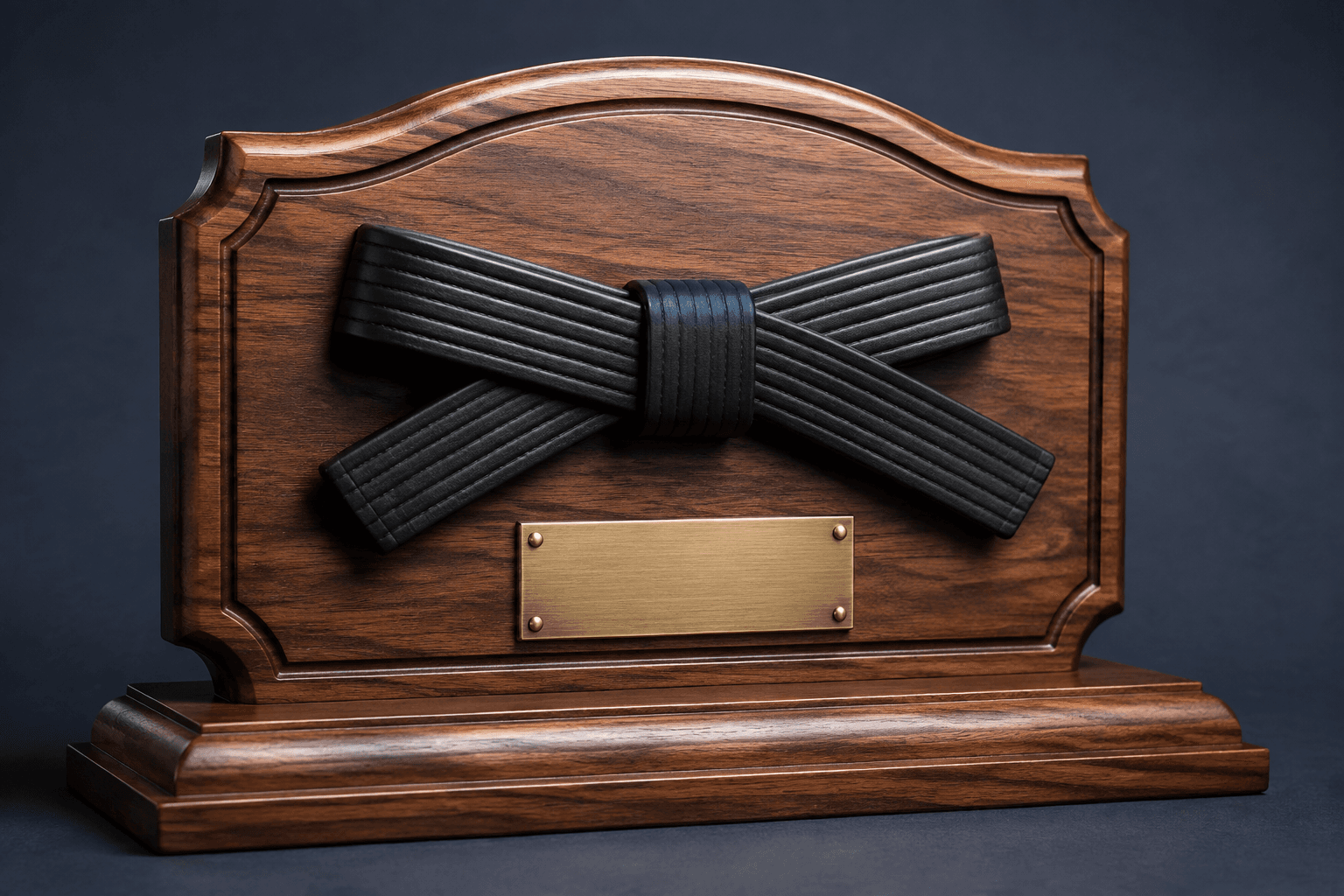
Sources: Japan Karate Association: The JKA Kyu and Dan Rank Certification System
What wording distinguishes grading from competition?
A grading plaque should make clear which approved milestone it records and who authorized the wording. The exact rank terminology may include a discipline-specific form that needs careful review. A tournament piece should identify the event, category and result or participation purpose according to the organizer's approved program.
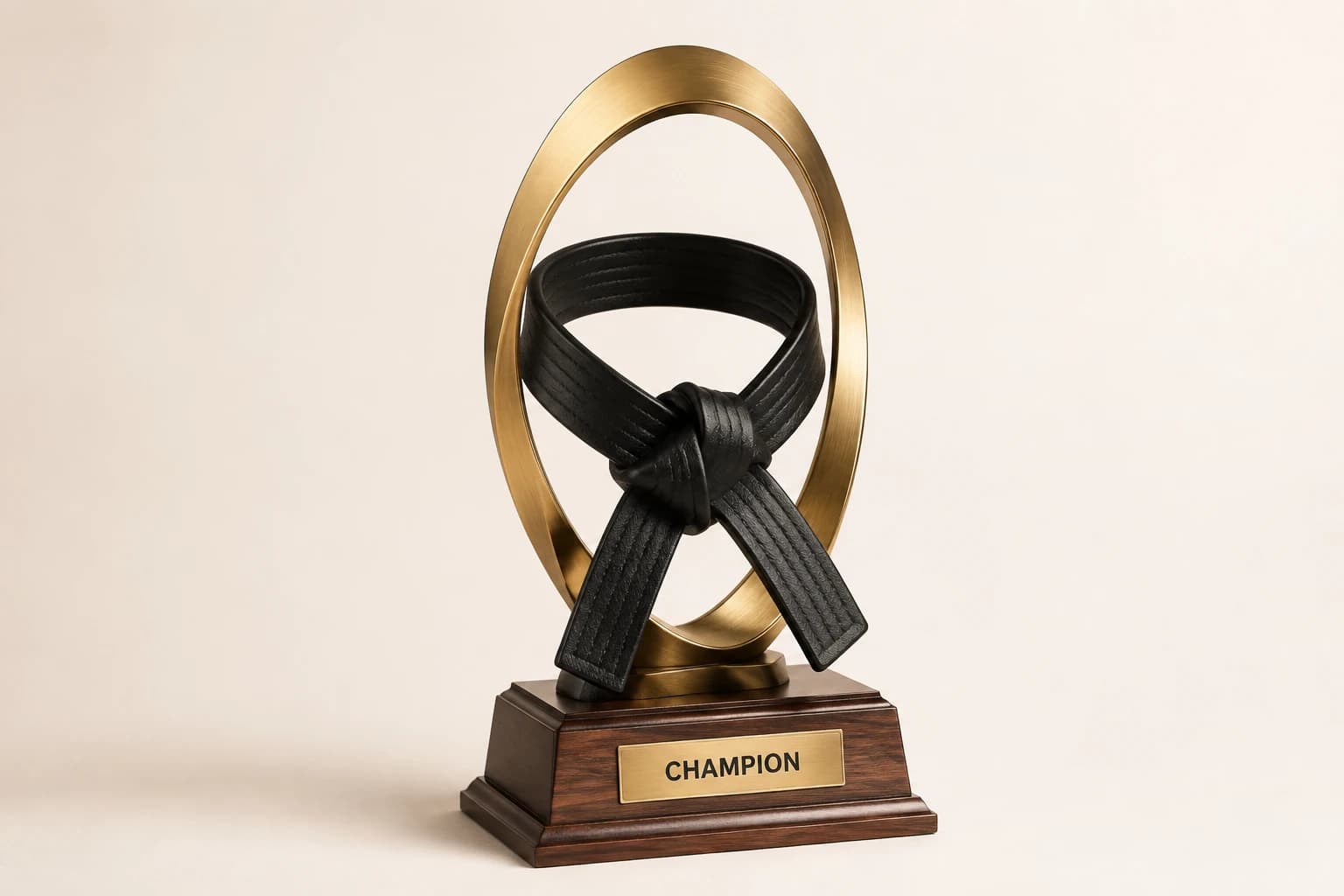
Avoid using Champion on a grading plaque merely because it appears in a trophy template. A successful promotion and a competitive championship are different claims. Likewise, do not use a tournament placing as evidence that a student holds a particular rank. The object can celebrate the achievement accurately without borrowing a stronger-sounding title from another context.
Which format suits the recipient’s display plans?
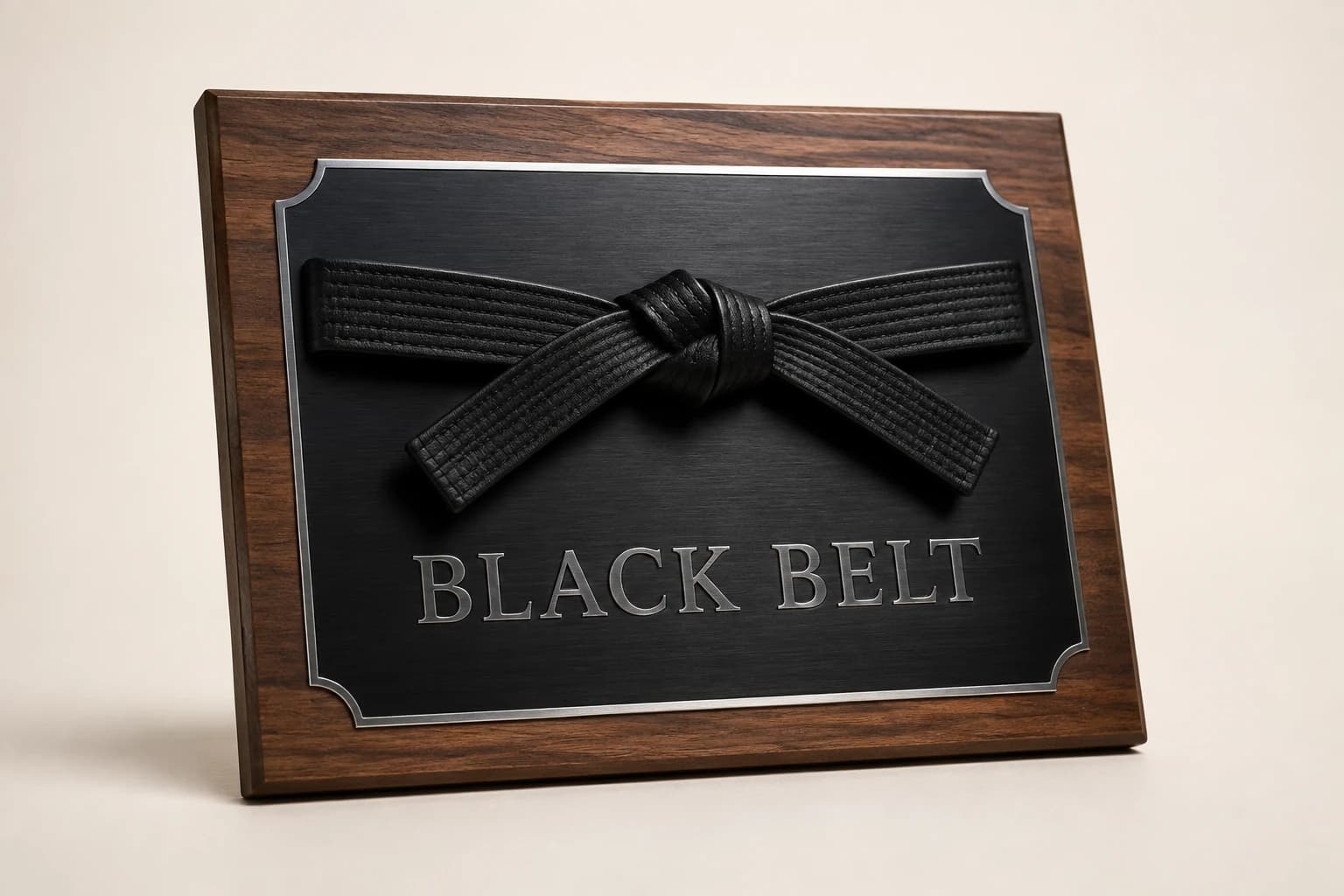
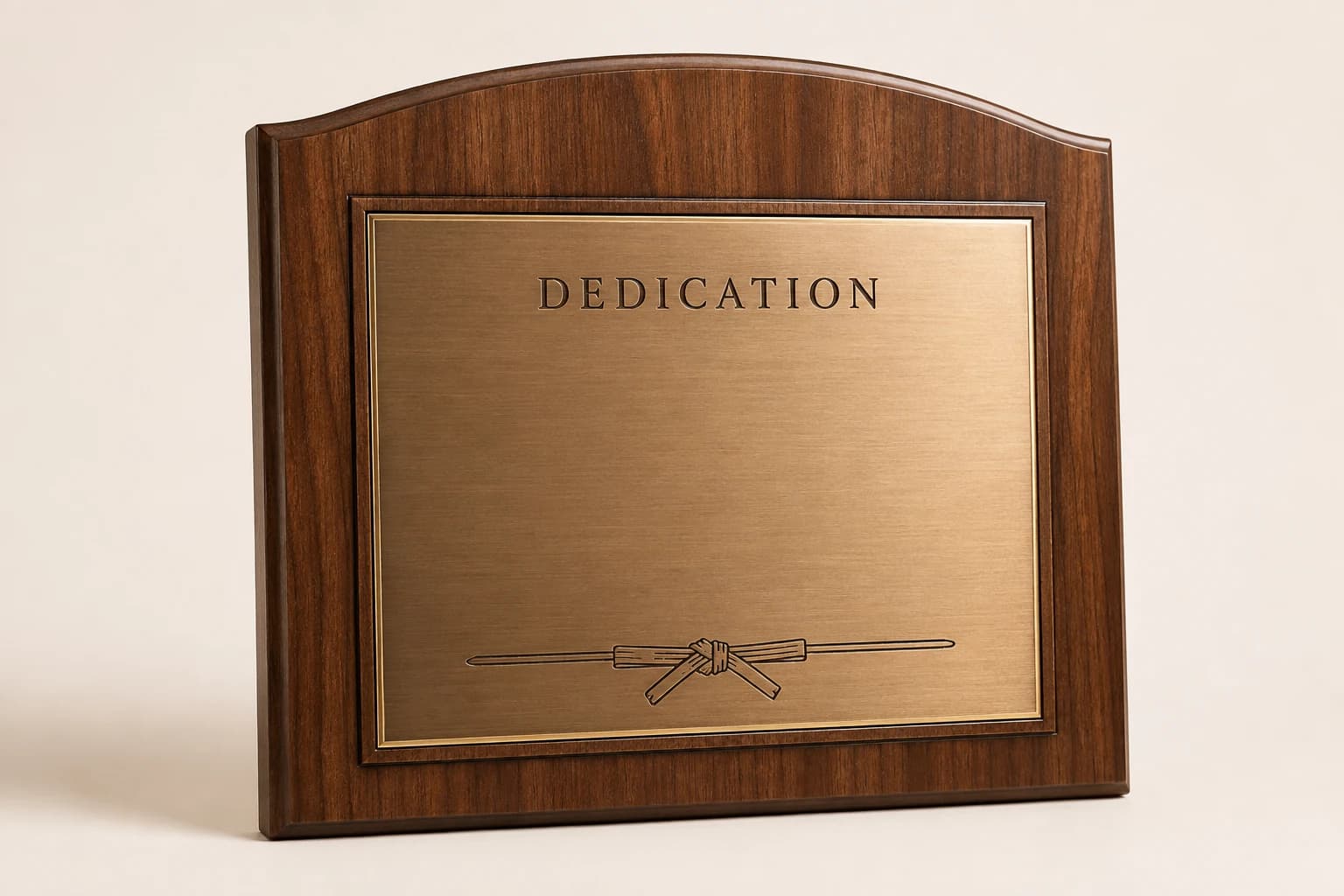
A plaque can provide a display surface for a name, milestone and dedication, while a medal offers a different personal presentation format. Ask the buyer how the piece will be presented and retained rather than assuming one format is inherently more meaningful. The actual dimensions, construction and included accessories need confirmation.
For a grading ceremony, a recipient may want a piece that connects to a belt display or home collection. For a tournament, the event may need a consistent set across multiple placements. Those are design and distribution questions, not universal rules that every dojo must follow. Choose the format around the approved occasion and the practical recipient experience.
How do you count promotions and tournament awards together?
The grading batch follows the number of approved milestone recipients and the chosen pieces per recipient. The tournament batch follows its award schedule, which may include several divisions and placements. A student appearing in both can legitimately receive two pieces because the objects recognize different occasions.
Do not deduplicate the entire order by student name and accidentally remove one approved achievement. Conversely, a person repeated on two administrative grading lists should not receive two identical plaques unless the program intends that. Keep an occasion and category reference beside each recipient so a repeated name can be interpreted correctly before quantities are finalized.
Count grading plaques and tournament pieces
The illustrative combined order contains eighteen grading plaques and twelve tournament pieces, totaling thirty objects. Enter eighteen main pieces and twelve additional category pieces with no spares. The tool checks that inventory only. It does not approve a rank, decide a placing or remove legitimate awards for students in both groups.
Method: Multiply units by pieces per unit, then add separately entered categories and explicitly chosen spares. No eligibility or spare allowance is inferred.
Build your plan
Set spares yourself. This calculates the quantities you enter; it does not assume a recommended buffer.
Use the article’s example files
Sample rows are fictional planning examples. Replace them with authorized information and retain the approval references privately; this file is not a production release.
Can grading plaques be planned before results are final?
If the ceremony date is known before final grading decisions, approve the stable design elements and define how personalized results will be released later. A blank sample or mockup should remain visibly illustrative. Do not manufacture a rank statement for every candidate on the assumption that all will receive the same result.
The instructor can provide the final approved list through the dojo's authorized process. If production timing requires later delivery, the dojo should plan the ceremony accordingly. A later personalized plaque can still record the correct milestone, but the buyer should not promise immediate completed pieces without a confirmed process and schedule.

Can a long competition division name be shortened?
A tournament may have detailed approved categories that include discipline, age grouping, level or event type. Ask the organizer for the exact public label. If the label is long, review the layout and any proposed shortened display form with that owner. The supplier should not invent a simpler division that changes the meaning of the result.
Keep competition labels separate from the student's grading terminology. They may use similar words while referring to different classifications. A clear inscription can identify the event and approved division without implying a rank certification. Review the complete statement, not just isolated fields, so the finished piece communicates the intended achievement accurately.
How do you present grading and tournament pieces together?
A dojo may celebrate promotions and tournament achievements at the same gathering. Arrange the presentation list by occasion or another deliberate sequence, and identify which physical piece belongs to each announcement. A correct total can conceal a grading plaque placed with the tournament medals.
Use distinct packing references even if the same student receives both. The presenter can then hand over the right item at the right point without reading private administrative notes aloud. If an award is held for an absent student, record the occasion with the custody status so the later handoff preserves why the student received that particular piece.
Where do instructor gifts belong in the order?
An instructor or volunteer appreciation gift can belong in the same purchase, but it is another recognition category. Give it its own wording, quantity and approving contact. Do not include it in the student promotion count merely because the same event coordinator orders everything.
If the gift mentions service dates or a specific contribution, have the responsible dojo contact approve those facts. The design can use a related visual style without implying that staff appreciation is a grading result or tournament placing. Keeping the categories clear makes the quote easier to compare and the presentation more accurate for every recipient.
What should the plaque-and-medal quote include?
Ask the quote to identify the actual plaque and medal constructions, personalization scope and any included presentation accessories. A medal image may show a ribbon or display box that needs explicit confirmation. A plaque proposal should state its intended display or mounting arrangement.
Compare complete quantities and services before choosing between proposals. If the budget requires a simpler format, revise the design while preserving the approved achievement wording and recipient coverage. Removing a personalized rank line or a tournament division can change the meaning of the object, so treat those as content decisions rather than silent cost reductions.
How do you preserve the two achievement records?
Keep the final approved grading wording with its milestone record and tournament wording with its event result. A replacement request can then identify the correct occasion even when the student has since progressed to a higher rank or competed in another division. Current status should not overwrite an earlier keepsake automatically.
If an actual historical error is discovered, have the responsible source owner authorize the correction and ask for a remedy appropriate to the construction. Do not use the replacement process to infer a new rank or upgrade a past placing. The purpose is to reproduce or correct the approved recognition, with a clear record of what changed and why.
Which date applies when recognition is presented late?
A dojo may present an overdue tournament medal alongside a current grading plaque. Keep the historical event date on the medal and the approved current milestone date on the plaque. The presentation date does not merge those achievements into one record. In the packing list, identify which piece is delayed recognition so the presenter can explain it accurately.
If a replacement was ordered for the older medal, track it as that historical item rather than a second current tournament placing. This preserves both the recipient’s intended recognition and the network’s ability to understand why one student receives two different pieces at the same gathering.
How does the illustrative planning example work?
A fictional dojo approves eighteen grading plaques and twelve tournament medals for a combined celebration. Each approved achievement receives one piece, giving 18 + 12 = 30 objects. Enter units 18, each 1, extras 12 and spares 0. These are separate approved occasions.
Four students appear in both groups. The total remains thirty because they receive separate pieces for separate approved achievements. If the buyer deduplicated by student identity, it would remove four intended objects and reduce the order incorrectly to twenty-six.
The worksheet labels each group by occasion and keeps the eligibility source separate. It contains no real student names or rank decisions. A real purchase needs the authorized grading list, the tournament's approved award schedule and exact inscriptions linked to each physical item.
Which option matches the approved purpose?
Choose a grading plaque for an authorized rank milestone and a tournament piece for the event’s approved result or participation category. A combined order can include both without merging their meaning. Keep each occasion’s source owner, exact wording and physical quantity visible so repeated recipients receive the intended distinct recognition.
| Option | Useful when | Decision to resolve |
|---|---|---|
| Grading plaque | The responsible instructor has approved a rank milestone. | Exact terminology, recipient and milestone wording. |
| Tournament medal | The event has approved a placing or participation category. | Division, result and required physical pieces. |
| Combined order | Several occasions share purchasing or presentation logistics. | Keep eligibility, inscriptions and packing references distinct. |
What should you know before ordering?
A mixed martial arts award order needs a clear distinction between rank approval, competitive results and the physical pieces being purchased. The same student can receive more than one valid award. These questions explain pricing scope, pending results and historical dates without treating a product choice as proof of achievement.
What affects the price of a mixed grading-and-tournament order?
The physical quantities, selected constructions, exact personalization and requested accessories define the main scope. Ask Dojo Award Studio for separate grading and tournament lines, plus packing and delivery. A medal image may show an accessory that needs confirmation, while a plaque may require a different display arrangement and inscription layout.
Can one student receive both a grading plaque and tournament piece?
Yes, when the responsible owners approve both achievements and the program provides separate pieces. A repeated name does not necessarily indicate a duplicate. Keep an occasion and category reference with each item so the coordinator can distinguish two valid awards from the same achievement accidentally entered twice.
Does a tournament medal establish the student’s rank?
Do not imply that. Use the event’s approved result wording for the tournament piece and obtain rank statements from the responsible instructor or organization. The two objects can share a visual style while recording different facts, and a competition placing should not be converted into an unverified rank claim.
Can plaques be personalized before grading is complete?
Plan stable artwork first, but keep achievement-specific wording pending until the authorized result is available. Agree on the actual production and presentation process before promising completed pieces. If final names require later delivery, the dojo should explain that arrangement rather than pre-engraving an assumed result for every candidate.
Which date belongs on an overdue tournament award?
Use the historical event date or season approved by the tournament owner. Presenting an older medal alongside a current grading plaque does not merge their occasions. The packing and announcement records should preserve which piece recognizes the earlier event and which records the current approved milestone.
Sources and scope
The sources below support the cited technical details. The ordering workflows are editorial recommendations. Your project specification, price and schedule are established in the written quote and approved proof.
- Japan Karate Association: The JKA Kyu and Dan Rank Certification System · checked 2026-09-05
Which buying guide should you read next?
All buying guidesKeep the authorized rank statement, original-language text and approved translated display together, then review both languages in the actual engraving layout.
Coordinate a multi-dojo order through one shared item schedule, with separate rank approvals, exact names, destination quantities and receiving owners for every location.