Dojo Award Studio · buyer guide
How to measure belts for a custom display
Dojo Award Studio buyers worldwide should measure the actual belts in the arrangement they want to preserve before requesting a custom belt-display quote. Record belt width, the relevant fold dimensions and the available display area separately. A count of belts does not establish holder fit, complete assembly size or a suitable mounting arrangement.
Reviewed 2026-09-05 · AI-assisted editorial review. General buying guidance; illustrative scenarios are not customer case studies. Images are AI-generated concepts.
Which belts belong in the display inventory?
Give every belt a simple item reference and record whether it will appear in the current display. A collection may contain practice belts, ceremonial belts, duplicates or pieces from different periods. The owner and instructor can decide which belong in the display without asking the supplier to infer rank history from colors.
Keep any historical or rank wording separately approved. A color is not a universal statement of rank across every discipline or school. For the measurement task, the useful facts are the actual item, its physical characteristics and the owner's intended arrangement. The production brief should not turn a belt inventory into an unverified certification record.
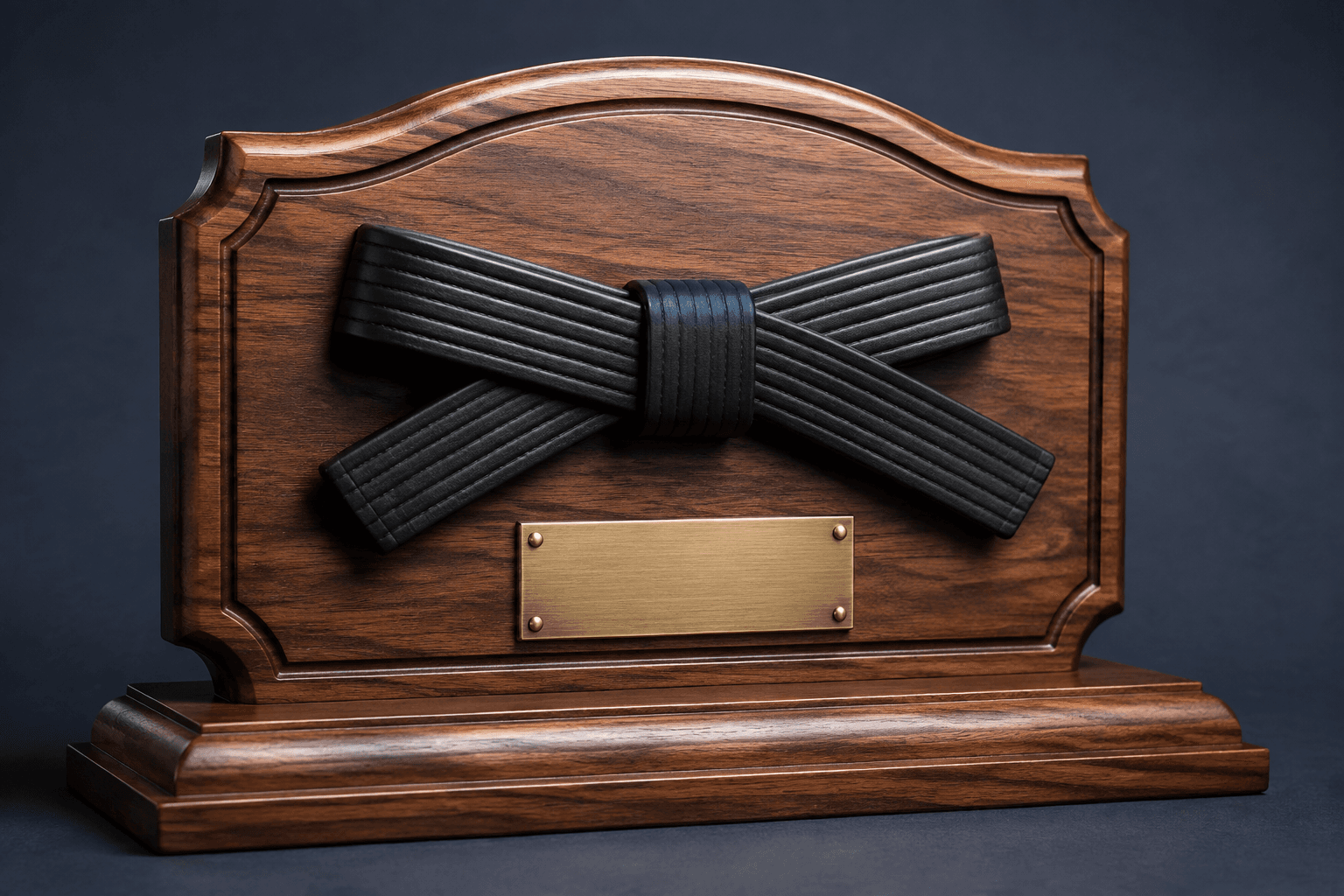
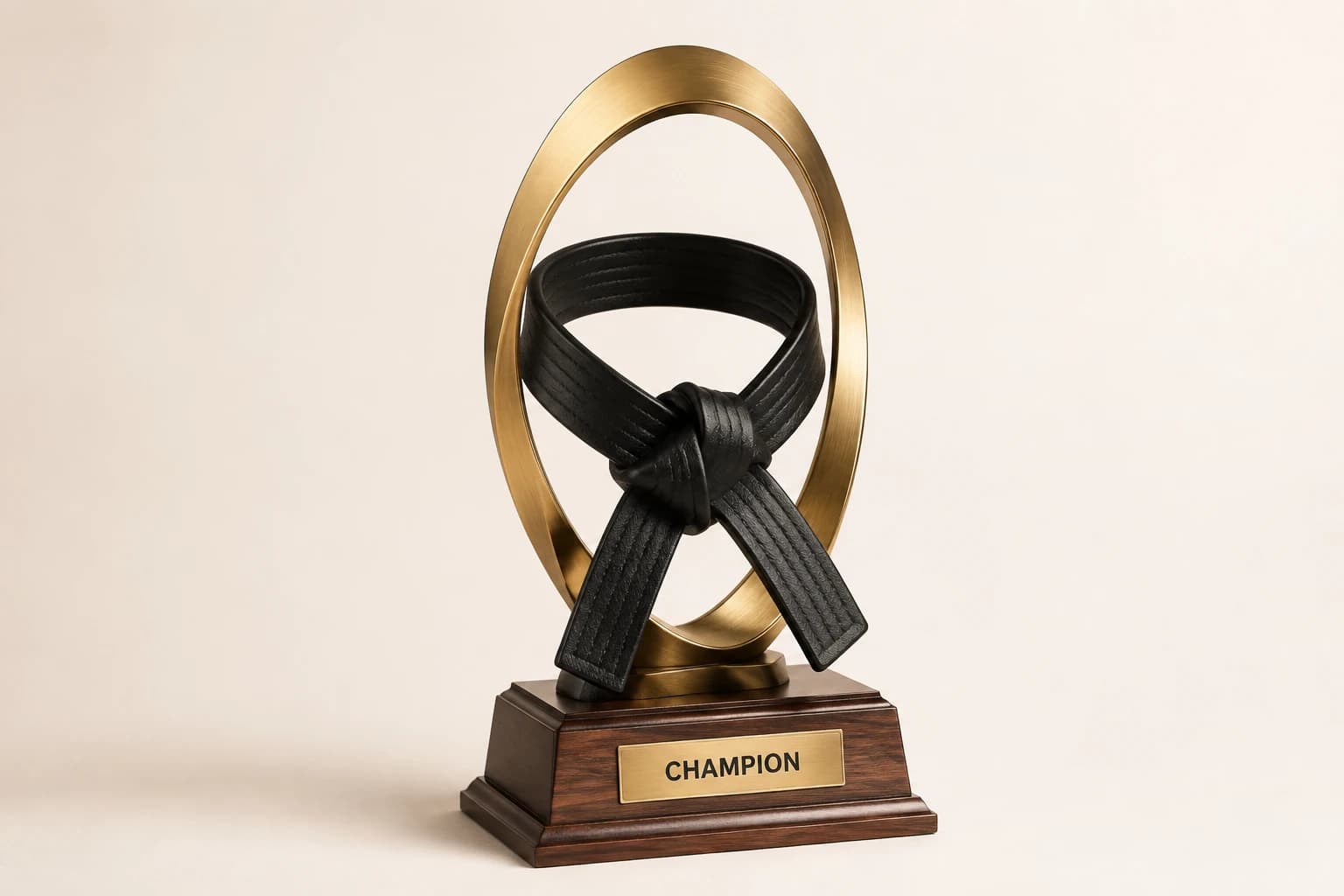
Where should belt width be measured?
Lay the belt in the condition and arrangement relevant to the proposed display and record the width with clear units. If it varies or has a thicker embroidered section, note that feature and show its location. Do not round a measurement into a convenient catalog category without telling the production contact the original observation.
Ask which measurement the proposed holder actually needs. A visible opening, strap or folded support may depend on different dimensions. The buyer's role is to provide an accurate observation; the designer's role is to explain how that observation informs the proposed fit. Avoid assuming that a belt that looks like another student's will use the same holder unchanged.
Allied asks buyers to select a belt-width option.
How should you show the intended belt fold?
A belt can occupy different space when folded, draped or displayed along its length. Make a simple reference arrangement and photograph it with labels indicating the intended front, visible embroidery and overlap. Record the dimensions of that arrangement rather than supplying only the belt's total length.
Do not force a meaningful embroidered section behind a holder simply to make a tidy repeated layout. If the owner wants it visible, include that requirement in the brief. The display maker can then propose spacing or a different arrangement against the actual belt. A custom display should reflect what the owner wants to preserve, not just accommodate an anonymous strip of fabric.
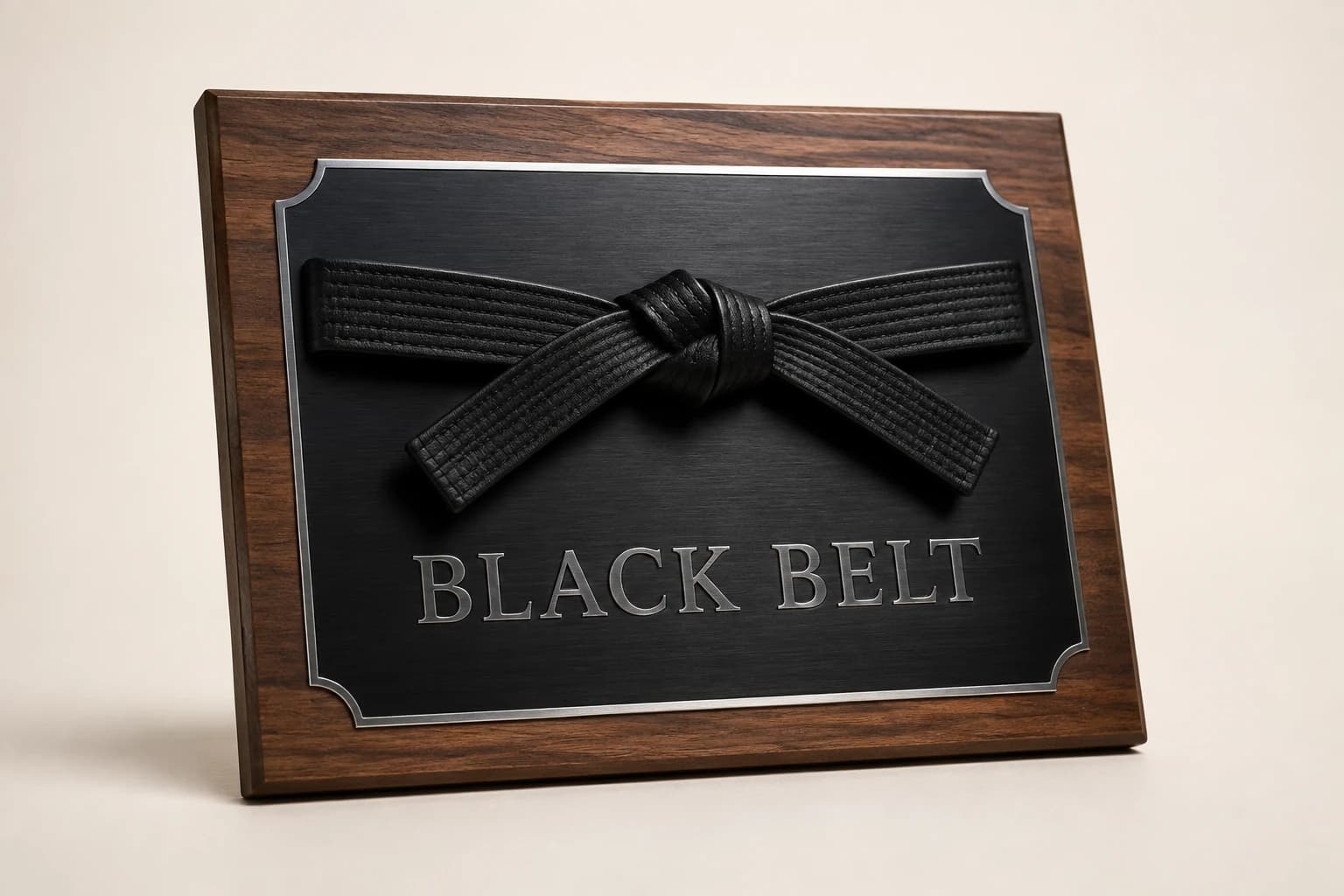
What thickness information does the holder need?
If the proposed holder needs to accommodate a fold or tied section, describe the actual bulk and provide the measurements requested by the production contact. Avoid making a material-strength claim or assuming a generic holder can carry every arrangement. The complete construction needs its own review.
A single belt can behave differently when folded several times, so document the configuration used for the measurement. If the arrangement changes later, revisit the affected fit dimensions. The worksheet should preserve that context. A number labeled thickness without saying where or how it was measured can be difficult for a designer to use reliably.
How do you measure the available display location?
Record the usable display area and any surrounding features that constrain placement. Keep wall width, available height and clearance around nearby objects distinct. Include a simple drawing showing where the owner intends the finished display to sit. A wide photograph helps explain the room but does not replace measured dimensions.
The complete display outline should include the header, holders, gaps and any attachment areas. Do not subtract only the belt width from the wall width and assume the remainder is decorative space. Ask the proposed design to show the whole assembly against the actual available area, then have the appropriate installer review the mounting conditions separately.

Use the article’s example files
Sample rows are fictional planning examples. Replace them with authorized information and retain the approval references privately; this file is not a production release.
Which measurement units should the brief use?
Choose a clear unit convention and label every dimension. If the source measurements use different units, retain the originals and have any converted values checked before they become a specification. An unlabeled number can be interpreted incorrectly even when its arithmetic conversion is simple.
Do not mix overall dimensions with usable openings in the same column. A holder described as a certain width may have a smaller usable area, and the difference can matter to the belt arrangement. Ask for the proposed finished dimensions and the critical fit dimensions to be labeled separately. That makes the drawing useful to both the buyer and the production reviewer.
Can you reserve space for future belts?
If the owner wants room for future additions, specify the number of reserved positions without inventing future rank names. The display can include planned physical capacity while keeping achievement claims tied to actual approved records. Ask whether later additions use matching components and what must be reviewed when they are installed.
A reserved position is not a measured future belt. The buyer may need to confirm later belt dimensions before ordering another holder. Keep that limitation visible rather than assuming every future item will match today's collection. The initial design can establish a practical expansion conversation without promising unlimited compatibility or a particular rank progression.
What should the proposed display drawing show?
The proposed drawing should connect each relevant belt arrangement to its intended holder and show the complete assembly. Review the difficult item first: a wide belt, thick fold or long visible embroidered section. A drawing that only shows repeated empty rectangles may not answer the buyer's actual fit concern.
If the production contact proposes a template or sample review, clarify what it establishes. A paper outline can help test placement and visual spacing but does not demonstrate the finished assembly's handling or mounting performance. Choose the review method around the unresolved question, then record the result before approving the complete custom order.
What changes require new measurements?
If the owner changes the fold or substitutes a different belt, identify which measurements are affected. Issue a revised worksheet rather than adding a handwritten note to an old photograph and assuming everyone will notice. The production contact should know whether the change applies to one position or the full display.
Before release, compare the latest measurement record with the latest drawing and inscription proof. A correct student name on an obsolete assembly drawing is not a complete approval. Keep the final revision references together so the finished display is made from one coherent set of instructions, with any remaining uncertainty explicitly resolved.
How do you check the finished belt arrangement?
After receiving the approved components, compare them with the written scope and follow the confirmed assembly instructions. Place the intended belts in their agreed arrangement only through the appropriate handling process. If a fit problem appears, document the affected item and its measurement context before requesting a remedy.
Do not trim, force or alter a meaningful belt merely because it does not fit an unreviewed opening. Likewise, do not modify the display structure without guidance for the actual construction. The purpose is to preserve the owner's collection in the agreed arrangement. A count of delivered parts cannot establish that the complete custom display meets that purpose.
How does the illustrative planning example work?
A fictional collection contains seven current belts, and the owner requests two additional reserved holder positions. The count is seven current positions plus two reserved positions, making nine proposed holders. Enter units 7, each 1, extras 2 and spares 0.
The calculator counts positions only. It does not establish holder dimensions, full wall area or mounting suitability. The worksheet provides separate rows for actual measurements and marks every sample dimension as unmeasured rather than filling the form with invented production numbers.
If the owner changes one belt from a compact fold to a long draped presentation, the holder count can remain nine while the complete layout changes. That is why the fold reference and measured arrangement belong in the brief alongside the quantity. A correct count is useful, but it is only one part of a custom display specification.
Optional calculation: Count current and reserved belt positions
Which option matches the approved purpose?
Choose the measurement approach around the actual belt presentation: folded, draped or a current collection with reserved positions. Each requires its own arrangement context and complete location outline. The number of positions can be calculated separately, but the finished drawing must connect those positions to real belt dimensions and spacing.
| Option | Useful when | Decision to resolve |
|---|---|---|
| Measured folded arrangement | The owner wants a compact repeated presentation. | Record the actual fold and visible embroidery requirements. |
| Measured draped arrangement | A longer portion of each belt should remain visible. | Review complete height, spacing and holder design. |
| Current collection with reserved positions | The owner wants a defined expansion allowance. | Future belts still need relevant fit checks. |
What should you know before ordering?
A custom belt-display brief needs accurate observations and a clear display arrangement before fit can be reviewed. The buyer supplies the actual collection and location information; the proposed design explains how they connect. These questions address quote inputs, measurement reuse, changes and the limits of a position-count calculation.
What measurements help produce an accurate custom-display quote?
Provide the actual belt inventory, requested fold or drape, relevant belt dimensions and measured location outline. Ask Dojo Award Studio which dimensions control the proposed holder design. The quote should identify components, complete dimensions, personalization and mounting scope, so the buyer can compare a defined display rather than an unspecified belt count.
Is total belt length enough for a display specification?
The proposed display may also need width, fold dimensions and context about visible embroidery or bulk. Ask which measurements affect the actual holder. A long belt folded compactly can occupy a different area from the same belt draped, so preserve the arrangement used when taking each measurement.
Can another student’s measurements be reused?
Measure the actual collection or obtain a specification confirmed for those exact items. Similar rank or color does not establish identical physical dimensions. Reusing another student’s numbers without checking can produce an opening or spacing that does not suit the intended fold, embroidery or complete display area.
Does the position calculator tell you the required wall size?
No. It counts the current and reserved positions entered. The complete measured drawing must account for the header, holders, gaps and attachment areas. Review that outline against the intended location and have the appropriate installer assess the actual mounting conditions before treating the display as ready to install.
What happens if the belt arrangement changes after approval?
Identify the affected belt and update the relevant measurements and drawing revision. A different fold can change fit without changing the number of positions. Keep the latest measurement record, assembly drawing and inscription proof connected so production uses one consistent approved specification for the finished display.
Sources and scope
The sources below support the cited technical details. The ordering workflows are editorial recommendations. Your project specification, price and schedule are established in the written quote and approved proof.
- Allied Medal Hangers: Custom Belt Display Header · checked 2026-09-05
Which buying guide should you read next?
All buying guidesA personalized header names the display; a complete belt rack must also provide the approved belt-holding components and mounting arrangement. Compare the complete included scope.
Coordinate a multi-dojo order through one shared item schedule, with separate rank approvals, exact names, destination quantities and receiving owners for every location.